
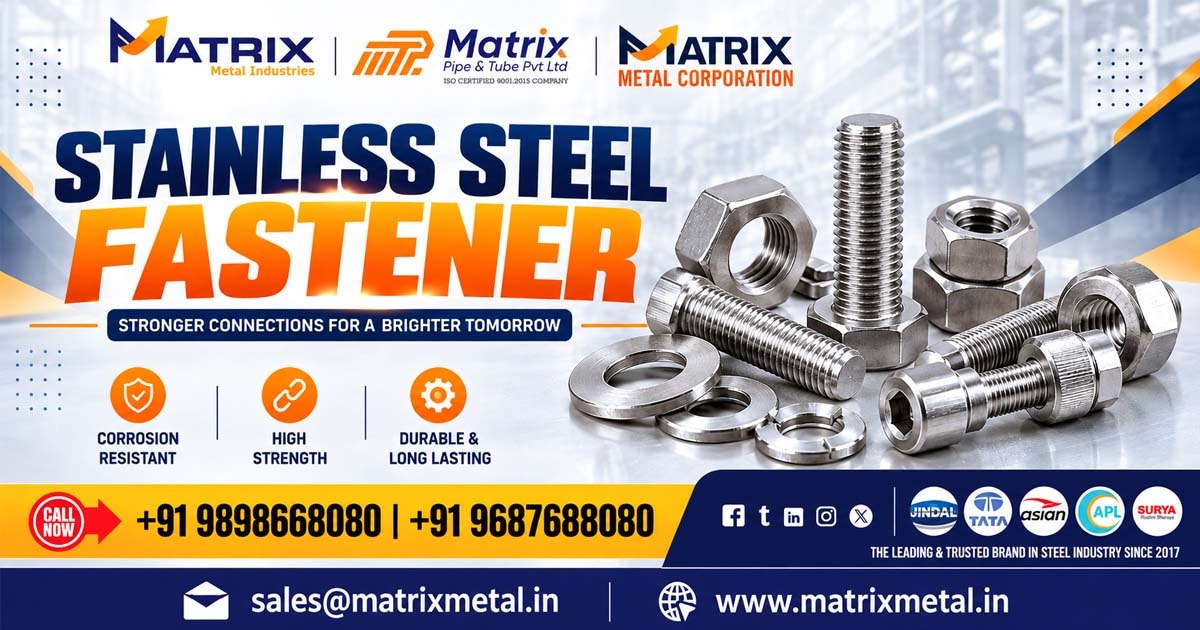
Stainless steel fasteners help secure equipment, structural components, pipelines, and industrial assemblies where dependable connections are essential. For buyers in Andhra Pradesh, selecting a suitable supplier means checking material requirements, dimensions, operating conditions, and order coordination before finalizing procurement.
What Should Buyers Check Before Ordering Stainless Steel Fasteners?
Fasteners may be small components, but an incorrect selection can create assembly problems, premature corrosion, or maintenance difficulties. Procurement teams should identify the actual working conditions before comparing suppliers.
When evaluating a Stainless Steel Fasteners Supplier In Andhra Pradesh, start with these requirements:
- Application: Identify whether the fasteners are intended for machinery, structural assemblies, pipe connections, equipment installation, or general maintenance.
- Material suitability: Consider moisture, chemical exposure, temperature, and the surrounding environment.
- Dimensions: Confirm diameter, length, thread type, pitch, and head style according to the assembly drawing.
- Quantity: Estimate the required quantity for installation, production, and planned maintenance.
- Documentation: Ask what material identification or inspection documents are available for the ordered product.
These checks help buyers reduce specification mismatches and avoid delays caused by ordering unsuitable components.
How Does the Industrial Environment Affect Fastener Selection?
Stainless steel fasteners are commonly considered for applications where corrosion resistance is important. However, stainless steel is available in different grades, and performance depends on the grade, environment, and contact with other materials.
For example, a fastener used inside a dry machine enclosure may face different conditions from one exposed to coastal moisture, cleaning chemicals, or industrial process fluids.
Before confirming the order, evaluate:
- Exposure to water, humidity, salt, or chemicals.
- Operating temperature and mechanical loading.
- Contact between the fastener and dissimilar metals.
- Required strength and compatibility with the connected components.
- Whether the assembly may need frequent dismantling for maintenance.
A suitable grade should be selected according to the actual service conditions rather than appearance alone.
Which Fastener Details Must Match the Assembly Drawing?
Even when the material is correct, dimensional mismatches can prevent proper installation. Buyers should share clear specifications with the supplier instead of relying only on a general product name.
Important details include:
- Fastener type: Bolt, nut, screw, washer, stud, or another specified component.
- Thread details: Metric or other thread standard, diameter, pitch, and threaded length where applicable.
- Head and drive type: The design must suit the assembly and available installation tools.
- Strength requirements: Confirm the required mechanical properties for the intended load.
- Quantity and packaging: Define the order quantity, identification requirements, and packaging needed for handling.
For repeat purchases, retaining an approved specification sheet helps maintain consistency across future orders.
How Can Buyers Compare Suppliers More Effectively?
Choosing a Stainless Steel Fasteners Supplier In Andhra Pradesh should involve more than comparing quoted prices. A lower initial price may not represent the best purchasing decision if the product does not match the drawing or delivery requirements.
Use this practical comparison checklist:
- Confirm that the supplier can provide the required fastener type and material grade.
- Check whether the requested dimensions and thread specifications can be matched.
- Ask about available inspection records and material documentation.
- Compare quotation terms, minimum order quantities, packaging, and delivery commitments.
- Clarify how shortages, specification discrepancies, or replacement requirements will be handled.
For industrial procurement, clear communication before dispatch can prevent avoidable installation and inventory problems.
Where Are Stainless Steel Fasteners Used Across Industrial Operations?
Stainless steel fasteners can be used in equipment assemblies, fabricated structures, maintenance work, and installations that require corrosion-resistant joining components.
Typical application areas include:
- Process industries: Equipment supports, machine assemblies, and selected pipe or vessel connections.
- Food and beverage facilities: Suitable equipment assemblies where the fastener material and design meet the applicable hygiene requirements.
- Chemical plants: Selected installations exposed to corrosive conditions, subject to grade compatibility.
- Construction and infrastructure: Fabricated components, support structures, and mechanical installations.
- Engineering workshops: Assembly, repair, and replacement of machinery components.
The exact fastener type and grade must be determined by the application. Stainless steel alone does not guarantee suitability for every chemical, load, or operating condition.
What Should Be Planned Before Installation or Replacement?
Correct installation is as important as selecting the right fastener. Improper tightening, damaged threads, or unsuitable tools can affect the joint and make later maintenance difficult.
Before installation, check the following:
- Clean the mating surfaces and inspect threaded holes.
- Verify that bolts, nuts, and washers match the approved assembly specification.
- Use the appropriate tightening method and torque requirements specified by the equipment or engineering design.
- Check for thread damage, corrosion, and signs of loosening during scheduled maintenance.
Where stainless steel threads are tightened together, galling (surface damage caused by friction and adhesion) can occur. Suitable installation practices and compatible lubricants, where permitted by the application, can help reduce this risk.
Services / Support: Four Practical Areas to Discuss
When contacting a Stainless Steel Fasteners Supplier In Andhra Pradesh, buyers can clarify these four areas of support before placing an order.
- Product identification: Discuss the required bolt, nut, screw, stud, washer, or other fastener against the application and drawing.
- Material and specification coordination: Confirm the required grade, dimensions, thread details, and any available material documentation.
- Order and project coordination: Share the bill of materials, quantity, packaging requirements, and target delivery schedule to help plan procurement.
- Replacement and repeat-order planning: Maintain approved product specifications and order records to simplify future replenishment and reduce the risk of mismatched components.
Location Support: Sourcing Fasteners for Projects Across Andhra Pradesh
Industrial buyers may need stainless steel fasteners for plant construction, fabrication, equipment maintenance, infrastructure projects, and production facilities. When comparing suppliers, consider dispatch arrangements, order quantities, documentation, and coordination with the project schedule.
Relevant business and industrial locations across the state include Visakhapatnam, Vijayawada, Guntur, Tirupati, Nellore, Kurnool, Rajahmundry, Kakinada, Anantapur, Kadapa, Eluru, Ongole, Srikakulam, Vizianagaram, Chittoor, Machilipatnam, Tenali, Hindupur, Proddatur, Bhimavaram, Amaravati, and Tadepalligudem.
For buyers seeking a Stainless Steel Fasteners Supplier In Andhra Pradesh, the key is to confirm whether the supplier can meet the actual technical and delivery requirements, including arrangements for shipping from outside the state when necessary.
Company Support: Connecting Andhra Pradesh Buyers With Matrix Metal Industries
Manufacturing support: Ahmedabad, Gujarat, India.
Matrix Metal Industries provides stainless steel fasteners and other industrial metal products through its Ahmedabad-based operations. Its published fastener range includes stainless steel nuts, dome nuts, eye nuts, Nylock nuts, rivets, nails, weld studs, slotted cheese-head screws, bolts, anchors, and washers.
For Andhra Pradesh projects, buyers can share their fastener specifications and confirm product availability, material requirements, order quantities, and dispatch arrangements before proceeding.
Website: https://matrixmetal.in/
FAQs
1. How do I select the correct stainless steel fastener grade?
Consider corrosion exposure, temperature, mechanical loading, and contact with other materials. Confirm the grade against the equipment specification and operating environment.
2. Can I order stainless steel fasteners for an industrial project in Andhra Pradesh from Ahmedabad?
You can contact Matrix Metal Industries to discuss your requirements and confirm product availability, order terms, and dispatch arrangements to your project location.
3. Which details should I share when requesting a fastener quotation?
Provide the fastener type, material grade, dimensions, thread specification, quantity, application, and any drawing or documentation requirements.
4. How can I reduce problems with stainless steel fasteners during installation?
Use compatible components, inspect threads, follow the specified tightening procedure, and apply suitable lubrication where permitted by the application.
Conclusion
Selecting industrial fasteners requires attention to material compatibility, dimensions, mechanical requirements, and installation conditions. Buyers in Andhra Pradesh should also evaluate documentation, quotation terms, and delivery coordination before confirming an order. A clearly defined specification helps procurement teams make more reliable purchasing decisions.
Planning an industrial fastener requirement in Andhra Pradesh? Contact Matrix Metal Industries through https://matrixmetal.in/ to discuss your specifications, product availability, and sourcing requirements.
CALL US:
Sales & Service
+91 9687688080
Mr. Narayan Choudhary
+91 9898688080
E-MAIL US:
sales@matrixmetal.in
matrixmetalind88@gmail.com
sales@matrixpipeandtube.com
Contact us today for inquiries or to place an order!
View Product: Click Here
